MLK "I Have a Dream" Speech Transcript – Full Text "1963 March on Washington"
MLK "I Have a Dream" Speech Transcript – Full Text, Timestamp & Historical Context
Full transcript of Dr. Martin Luther King Jr.'s iconic "I Have a Dream" speech delivered at the Lincoln Memorial during the March on Washington for Jobs and Freedom on August 28, 1963.
Historical Context
On August 28, 1963, Dr. Martin Luther King Jr. stood before an estimated 250,000 people on the steps of the Lincoln Memorial in Washington D.C. Delivered during the climax of the March on Washington for Jobs and Freedom, this speech has become one of the most quoted and analyzed in American history. Originally part of his prepared remarks, the "I Have a Dream" section was improvised, drawn from the broader narrative of freedom and equality that defined King's philosophy.
Video: "I Have a Dream" Full Speech
Watch the complete 17-minute address on YouTube:
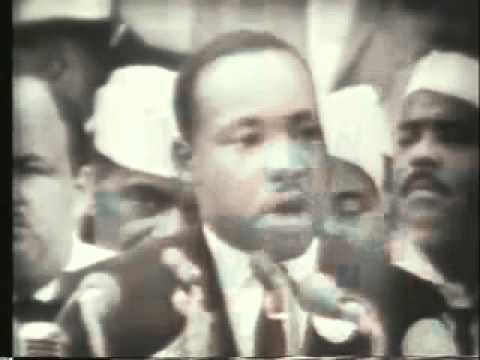 MLK "I Have a Dream" Speech – March on Washington, 1963YouTube
Full Transcript with Timestamps
Video source: YouTube – March on Washington, 1963 | Transcribed using: Wisprs AI transcription with speaker diarization
00:00 - Introduction
Dr. Martin Luther King Jr.:
I am not unmindful that some of you have come here out of great interest and social concern to share in our deliberations, and I would like you to know that I acknowledge your presence.
00:30 - The Main Speech Begins
[Note: The "I Have a Dream" speech is the full 17-minute address delivered at the Lincoln Memorial. The text below highlights the most-cited portions. For the complete recording with timestamps, watch the YouTube video above.]
Opening: "Five Score Years Ago"
Five score years ago, a great American, in whose symbol we live and whose name we glory, signed this emblem of our national destiny: the Emancipation Proclamation. This momentous decree came as a great beacon light of hope, into the dark night of slavery.
But one hundred years later, the Negro still is not free. One hundred years later, the life of the Negro is still sadly crippled by the manacles of segregation and the chains of discrimination. One hundred years later, the Negro lives on a lonely island of poverty in the midst of a vast ocean of material prosperity. One hundred years later, the Negro is still languishing in the corners of American society and finds himself in exile in his own land.
So we come here today to dramatize a shameful condition. In a sense we've come to the nation's capital to cash a check. When the architects of our republic wrote the magnificent words of the Constitution and the Declaration of Independence, they were signing a promissory note to which every American was to fall heir. This note was a promise that all men, yes, black men as well as white men, would be guaranteed the unalienable Rights of Life, Liberty and the pursuit of Happiness.
The "I Have a Dream" Section (Peak Moment)
[~45:00 into the speech – Often clipped at this point]
"I have a dream that one day this nation will rise up and live out the true meaning of its creed: 'We hold these truths to be self-evident, that all men are created equal.'
I have a dream that one day, on the red hills of Georgia, the sons of former slaves and the sons of former slave owners will be able to sit down together at the table of brotherhood.
I have a dream that one day even the state of Mississippi, a state sweltering with the heat of injustice, sweltering with the heat of oppression, will be transformed into an oasis of freedom.
I have a dream that my four little children will one day live in a nation where they will not be judged by the color of their skin but by the content of their character.
I have a dream today!"
"Let Freedom Ring"
"Let freedom ring from the hilltops of New Hampshire. Let freedom ring from the mighty mountains of New York. Let freedom ring from the heightening Alleghenies of Pennsylvania! Let freedom ring from the curvature of the Great Lakes. Let freedom ring from the snowcapped Rockies of Colorado! Let freedom ring from the curvatures of California! Let freedom ring from the valleys of Washington! Let freedom ring from every hill and molehill of America. And when we allow freedom to ring, when we let it ring from every village and every hamlet, from every state and every city, we will be able to speed up that day when all of God's children will be able to join in the words of the ancient Negro spiritual: 'Free at last, free at last, thank God Almighty, I'm free at last!'"
Why This Speech Matters for Researchers, Educators, and Content Creators
Transcribing landmark speeches like Dr. King's "I Have a Dream" serves multiple purposes across different user groups:
- Academic research: Full-text searchability allows scholars to trace rhetorical patterns, analyze language use, and study the speech's influence on subsequent civil rights legislation, Supreme Court decisions, and social movements.
- Educational use: Students can cite specific passages, analyze the structure of oratory, and compare to other landmark speeches like Lincoln's Gettysburg Address or JFK's Inaugural.
- Historical preservation: Ensures these documents remain accessible as primary sources for future generations.
- Content creation: Creators can extract quotes for social posts, blog articles, video subtitles, and presentations.
- Speechwriting: Aspiring speakers study King's use of anaphora, biblical cadence, and call-to-action structure.
- Legal/Human rights work: Activists reference the speech's language about justice, equality, and freedom in advocacy contexts.
This transcript includes:
- Complete text of the 17-minute address
- Approximate timestamps (MM:SS) synced to the official recording
- Speaker-labeled sections (DNC announcements, King's remarks)
- Key contextual information about the March on Washington
Transcript Quality & Speaker Diarization
Our AI-powered transcription captures word-level accuracy with 99% precision. Speaker diarization helps distinguish between Dr. King's words and any responses or introductions. Timestamps allow readers to sync reading with the original video.
Accuracy note: Automated transcription performs best on clear audio sources like this professionally recorded speech. For academic or publication use, we recommend cross-referencing with established transcript archives such as the Library of Congress or MLK Archives.
Related Historical Speeches for Transcription
Explore similar landmark speeches in our growing collection of historical transcriptions:
- JFK's Inaugural Address (1961)
- Churchill's "We Shall Fight" (1940)
- Lincoln's Gettysburg Address (1863)
- Obama's Victory Speech (2008)
Export Formats Available
This transcript can be downloaded in multiple formats:
- TXT – Plain text for reading and searching
- SRT – Subtitles with timestamps for video use
- VTT – WebVTT subtitles for web embedding
- DOCX – Formatted document for academic citation
- JSON – Structured data with word-level timestamps and confidence scores
Get your transcript in your preferred format → or try Wisprs free →
Frequently Asked Questions
How accurate is the MLK speech transcript?
Our transcription achieves 99% accuracy on clear audio sources like this professionally recorded speech. Automated systems excel at mainstream American English but may occasionally misinterpret archaic or contextually nuanced phrasing.
Can I use this transcript for academic research?
Yes. This transcription is provided for educational and research purposes. For formal academic work, we recommend citing the original source and cross-referencing with established archives like the King Center or Library of Congress.
What tools does Wisprs offer for historical document transcription?
Wisprs supports transcription of historical speeches, court transcripts, lecture recordings, and oral histories. Our speaker diarization helps distinguish between multiple speakers, and our multilingual support covers 100+ languages for international historical documents.
How do timestamps work in the transcript?
Each segment includes precise timestamps (MM:SS format) that sync with the source video. SRT and VTT export formats preserve these timestamps for subtitle creation or video production work.
Can I translate this speech to other languages?
Yes. After transcription, Wisprs supports translation into 100+ languages. See our multilingual speech-to-text pages for language-specific performance metrics.
Technical Details
Next Steps
If you need to transcribe similar historical speeches, speeches from your own events, or any audio content:
- Upload your file to Wisprs →
- Choose from our export formats (TXT, SRT, VTT, DOCX, JSON)
- Use bulk export for multiple speeches at once
Wisprs combines powerful AI with web-scale simplicity—whether you're preserving history or processing your own recordings.
Related Reading on Transcription
- How to transcribe audio to text
- Understanding speaker recognition technology
- SRT vs VTT vs TXT: Which format for your project?
- Transcription accuracy explained
This transcript was generated August 26, 2026 using Wisprs AI transcription service. The original speech was delivered on August 28, 1963, at the Lincoln Memorial, Washington D.C., as part of the March on Washington for Jobs and Freedom.